Your Ground. Done Right.
Cracking, settling, pooling water — these aren't cosmetic problems. They're your concrete telling you something. We listen, diagnose, and pour it right the first time.
Cracking wider than a quarter? That's structural.
Settled edges trap water against your foundation.
Pooling water means grade failure — not just drainage.
12+ yrs
Pouring Midwest Concrete
Est.
2012
Problem → Solution
Recognize Your Situation.
Every project below started with a homeowner who wasn't sure if it was serious. Click any panel — see the diagnosis, the fix, and the result.
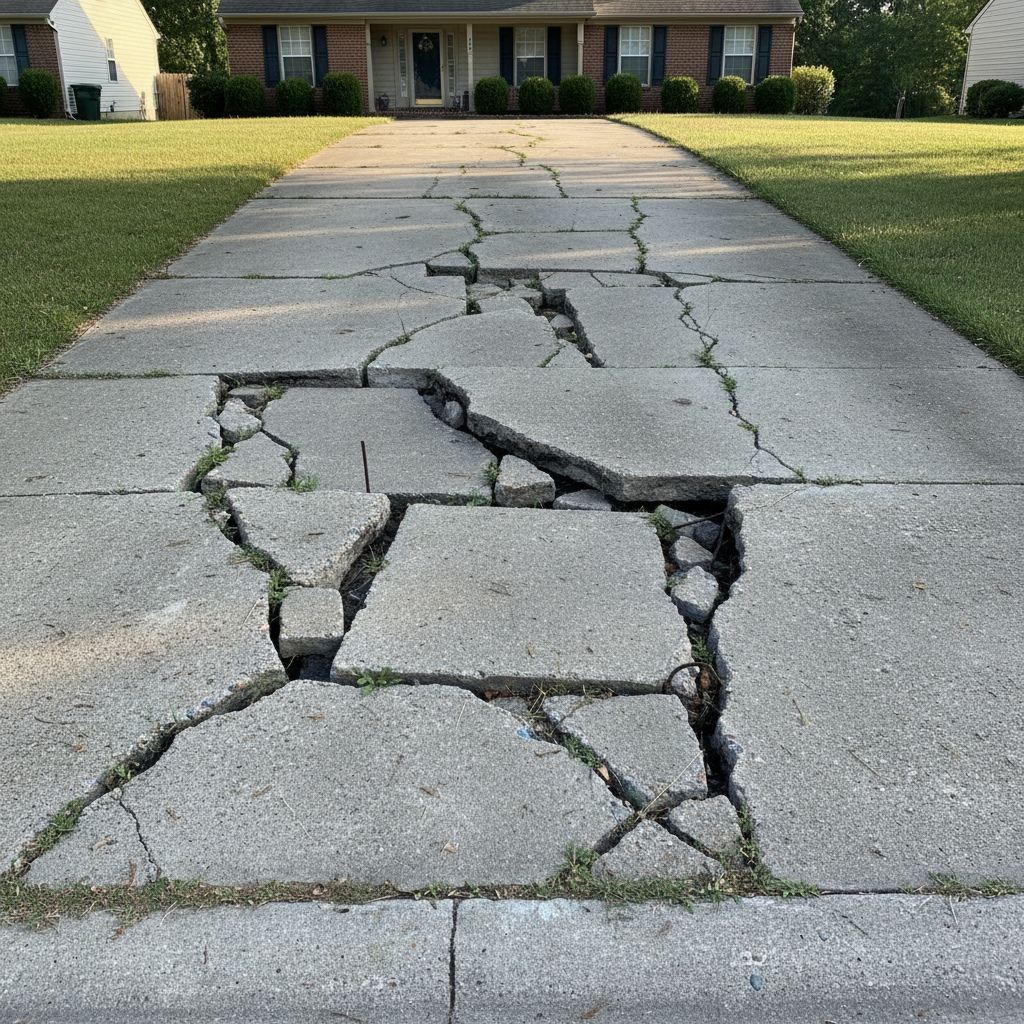
Heaved & Cracked Driveway
Root intrusion + freeze-thaw cycles split this 20-year-old slab into five sections.
Diagnosis
Tree root intrusion beneath the slab caused differential heave. Cracks exceeded ½" — structural failure, not surface wear.
Solution
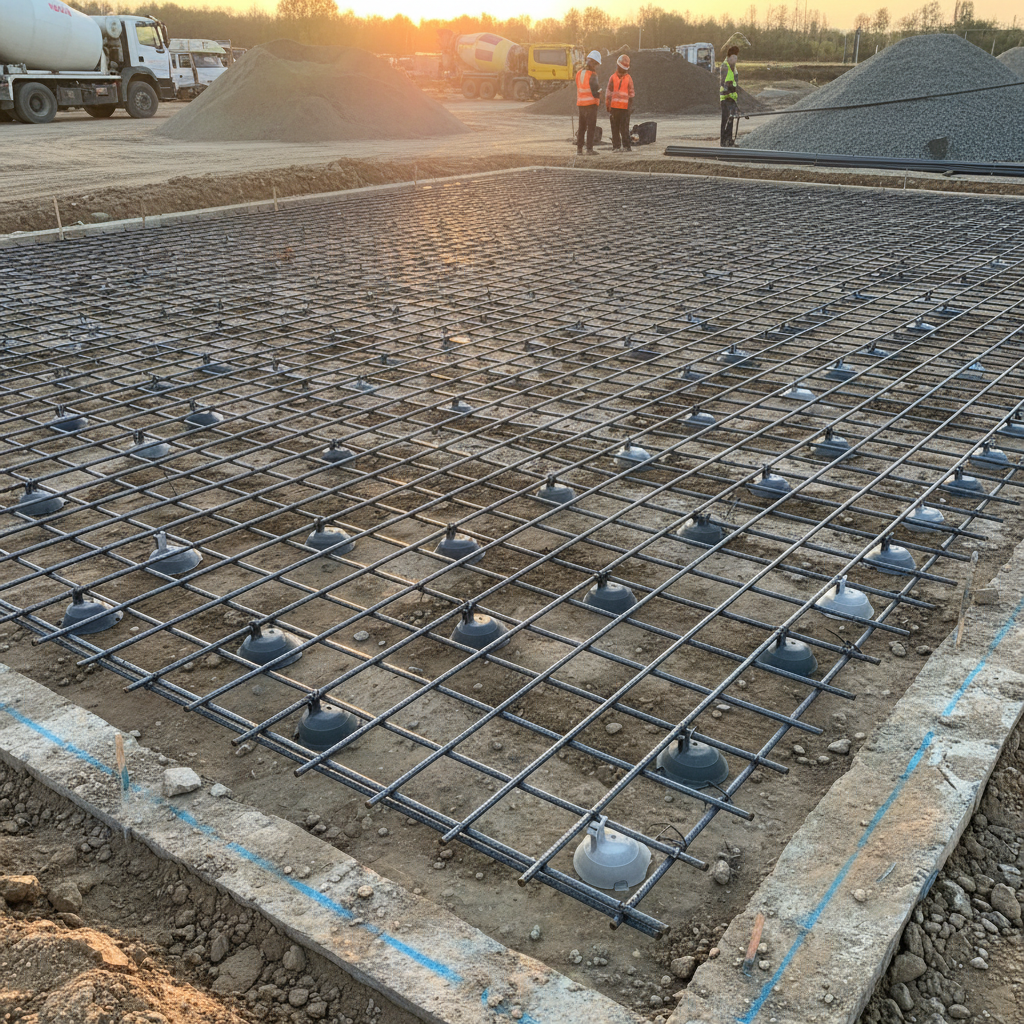
Full demo and haul-off. Root barrier installed. 4" reinforced slab with #4 rebar at 18" O.C., fiber-reinforced mix for flex strength.
Result
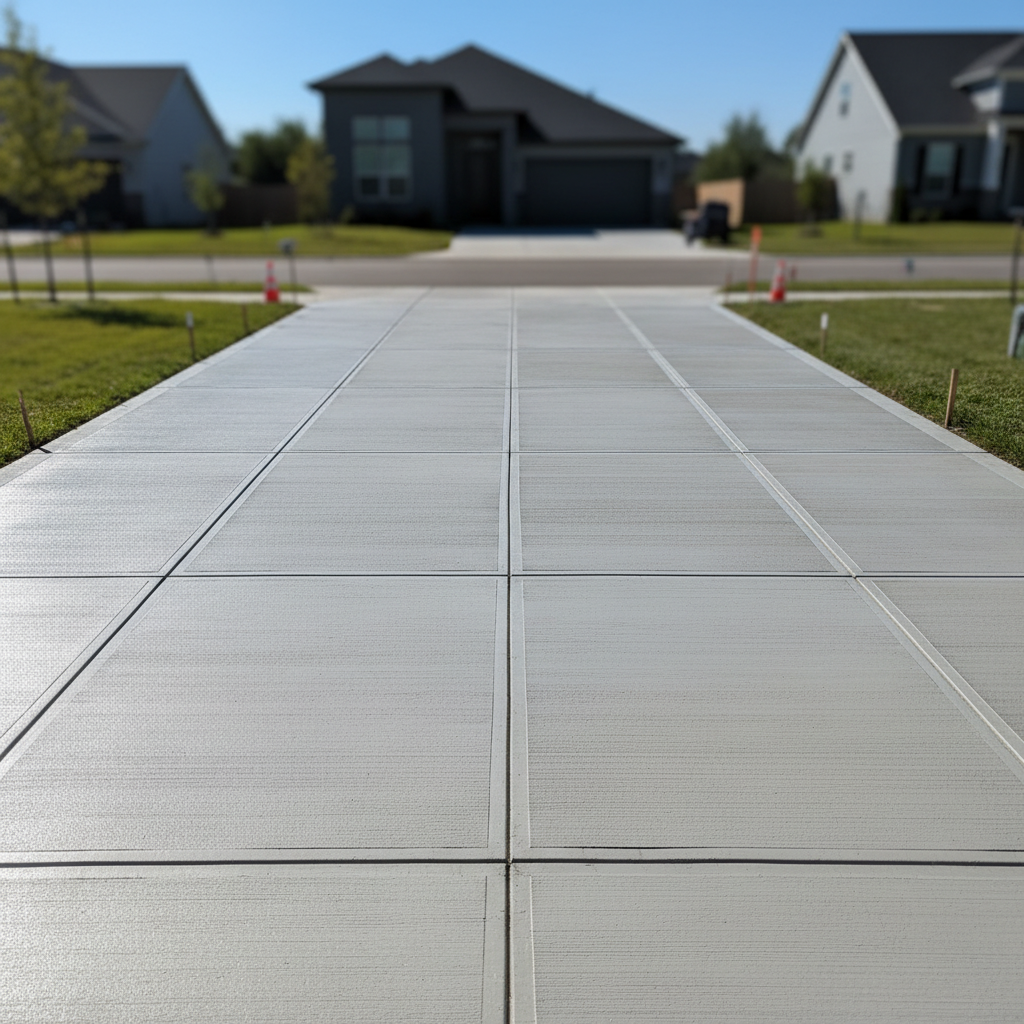
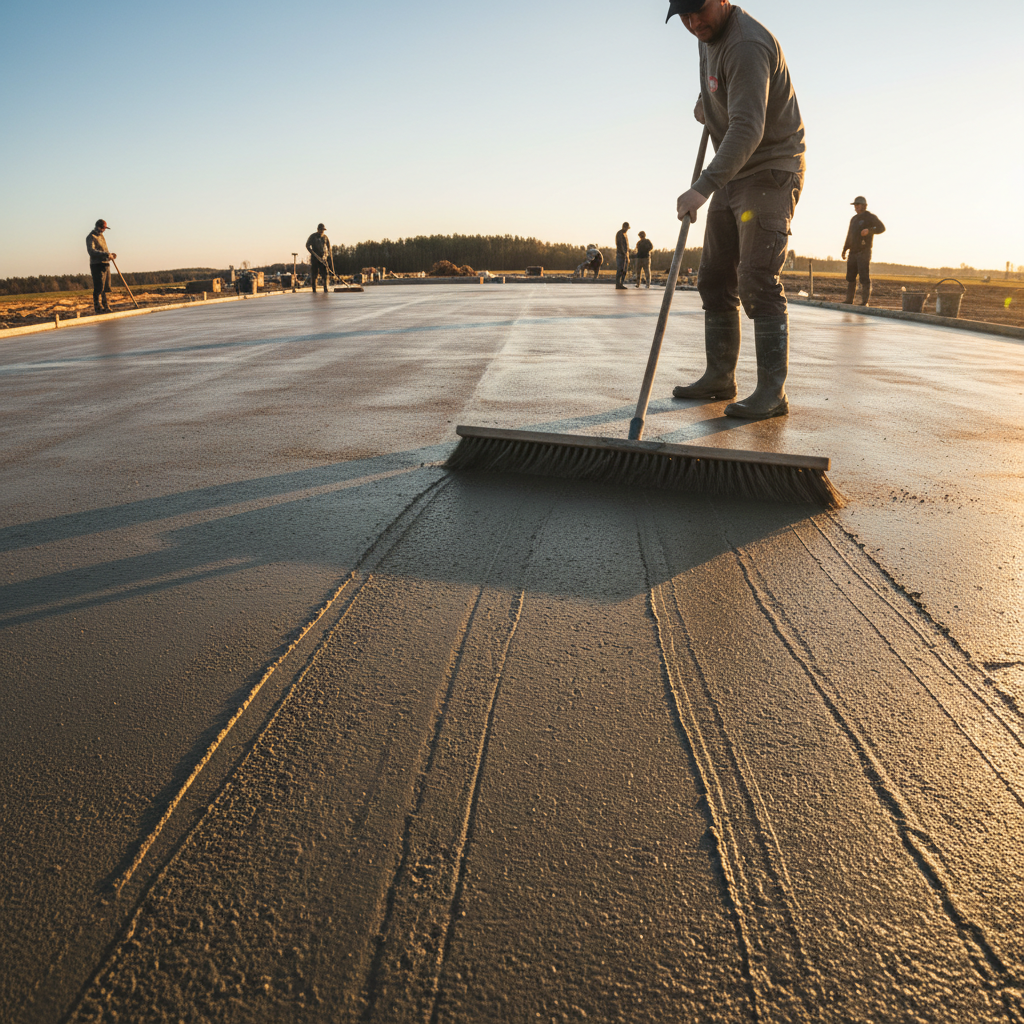
Smooth broom finish with decorative saw-cut joints. Client reported zero pooling after first spring thaw.

Spalling Backyard Patio
Surface delamination from improper curing left this patio flaking and unsafe underfoot.
Diagnosis
Original pour was finished too early — bleed water worked back in, weakening the surface layer. Spalling depth reached ¾" in places.
Solution
Full slab removal. New 4" pour with curing blanket left 72 hrs. Broom finish with sealant coat at 28 days.
Result
Client uses the patio year-round. No freeze-thaw flaking after two winters.
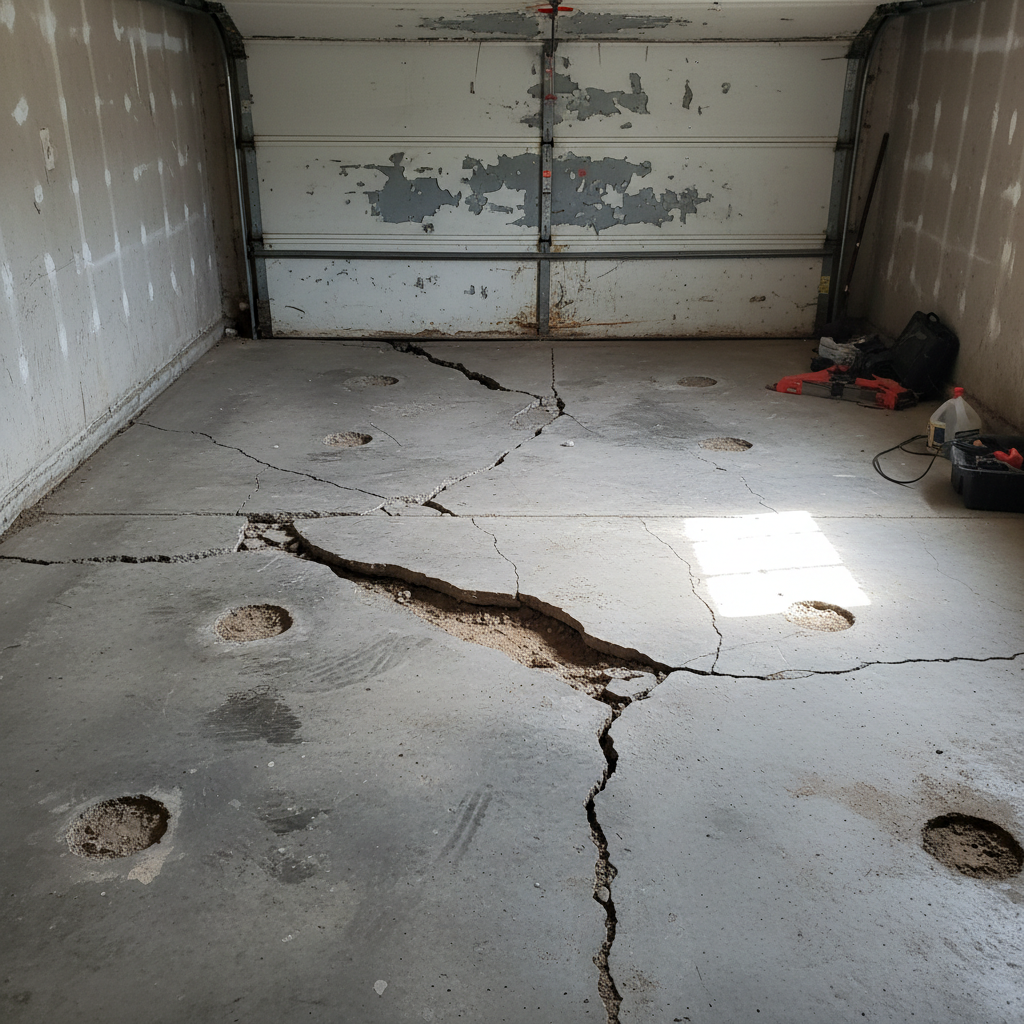
Sunken Garage Floor
Mudjacking failed twice. Sub-base erosion required a real solution.
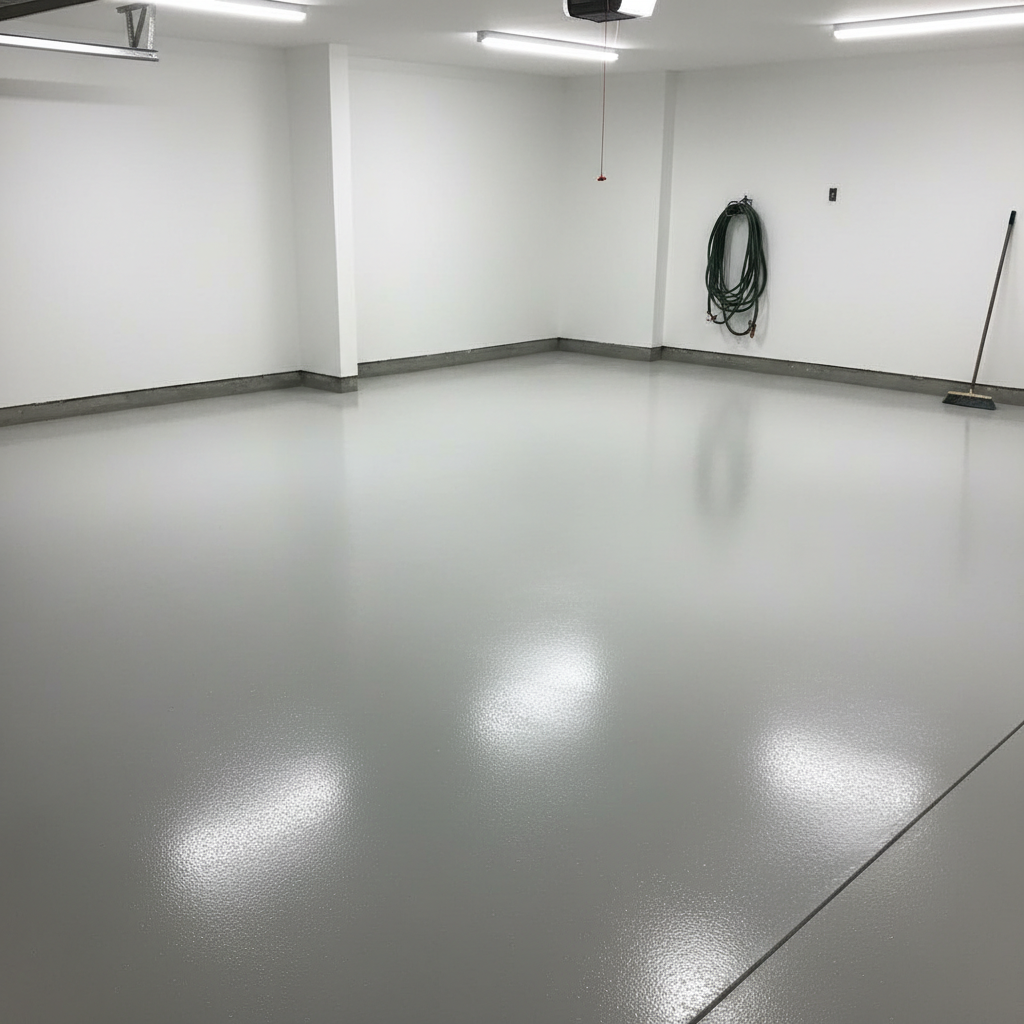
Diagnosis
Soil beneath the original pour was never properly compacted. Mudjacking pushed the slab up temporarily but the void refilled with water.
Solution
Demo, excavate 8" deep, compact gravel base, 6" reinforced slab with vapor barrier. Expansion joint at door header.
Result
Level floor within 1/8" over 24 feet. Client converted garage to workshop space.

Settled Front Walkway
A 2" lip at the front step was a trip hazard and ADA concern.
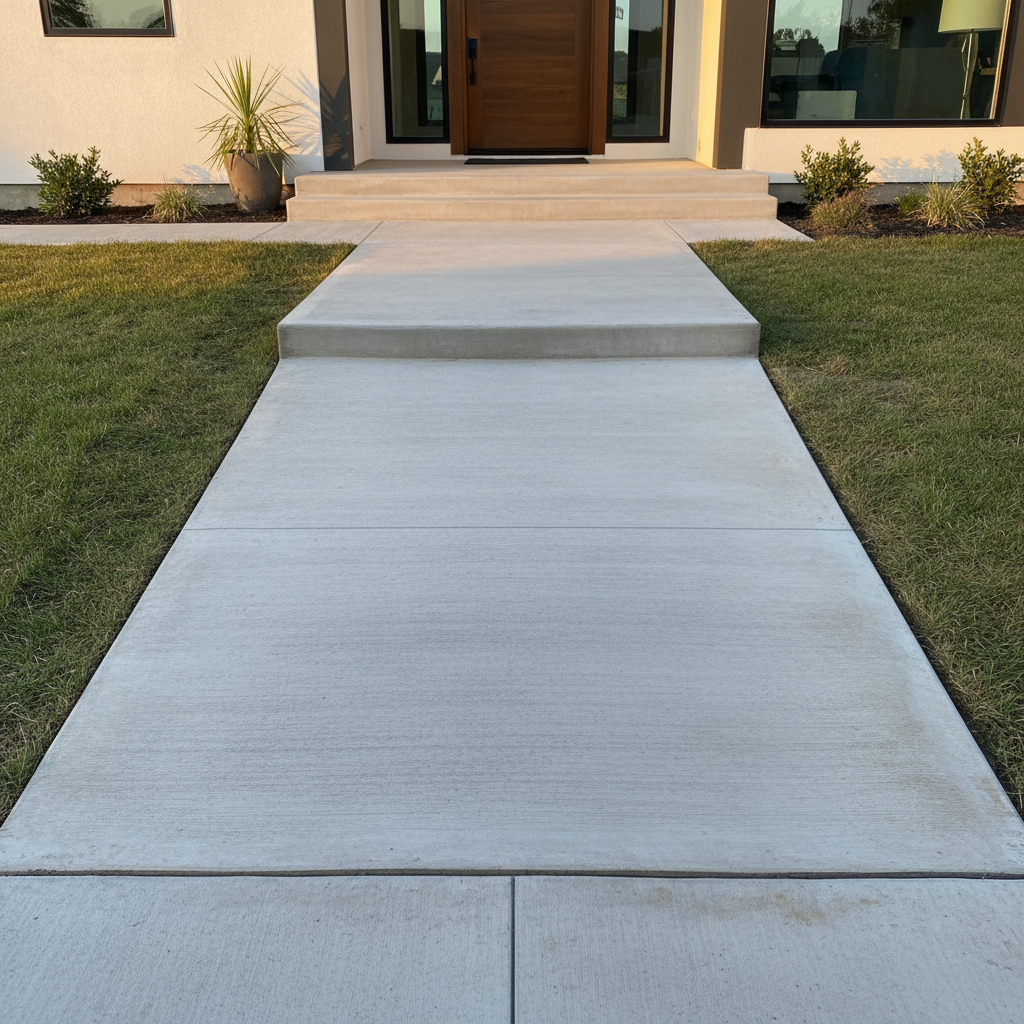
Diagnosis
Organic material in the fill (old sod layer) decomposed over 8 years, creating a 2" differential settlement at the step connection.
Solution
Remove two walkway panels, excavate organic material, compact crushed limestone base, pour matching 4" slab with tooled edges.
Result
Level transition, no trip hazard. Matched existing texture within one shade.
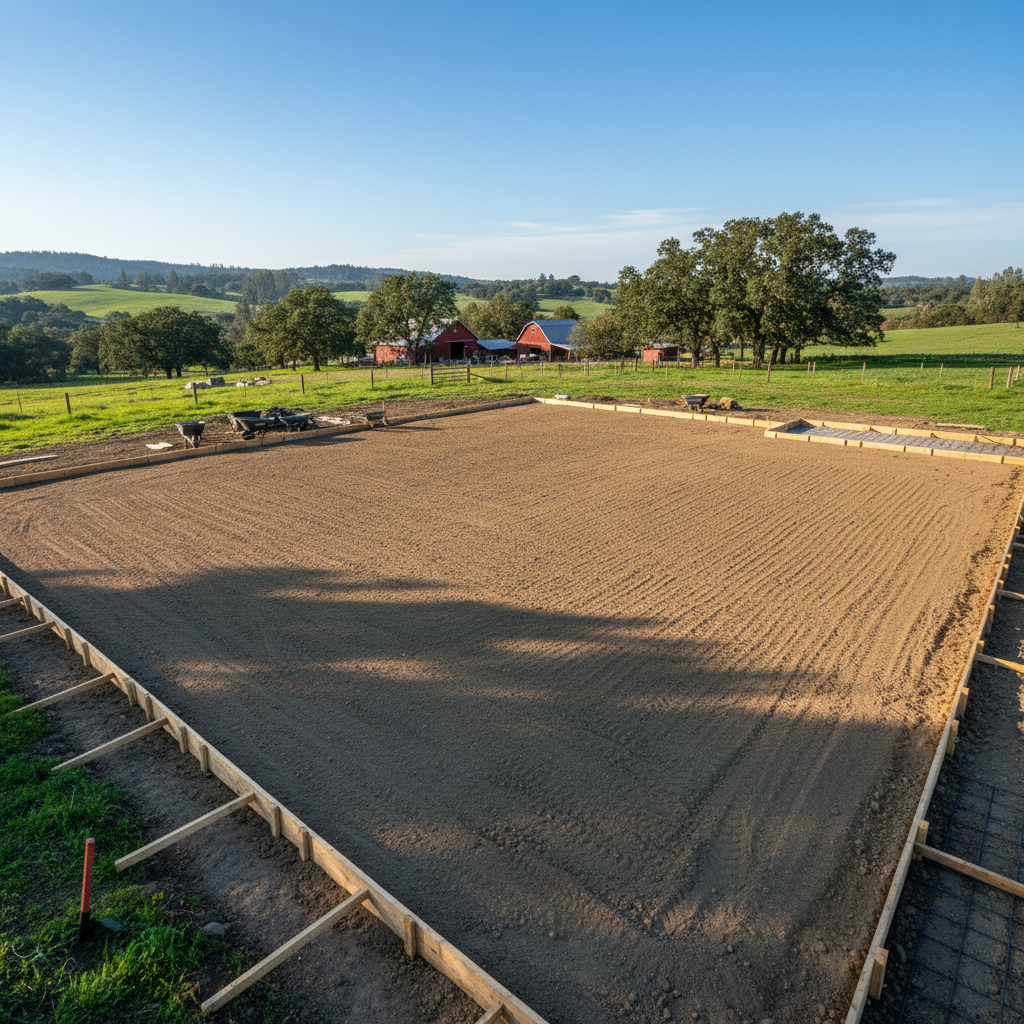
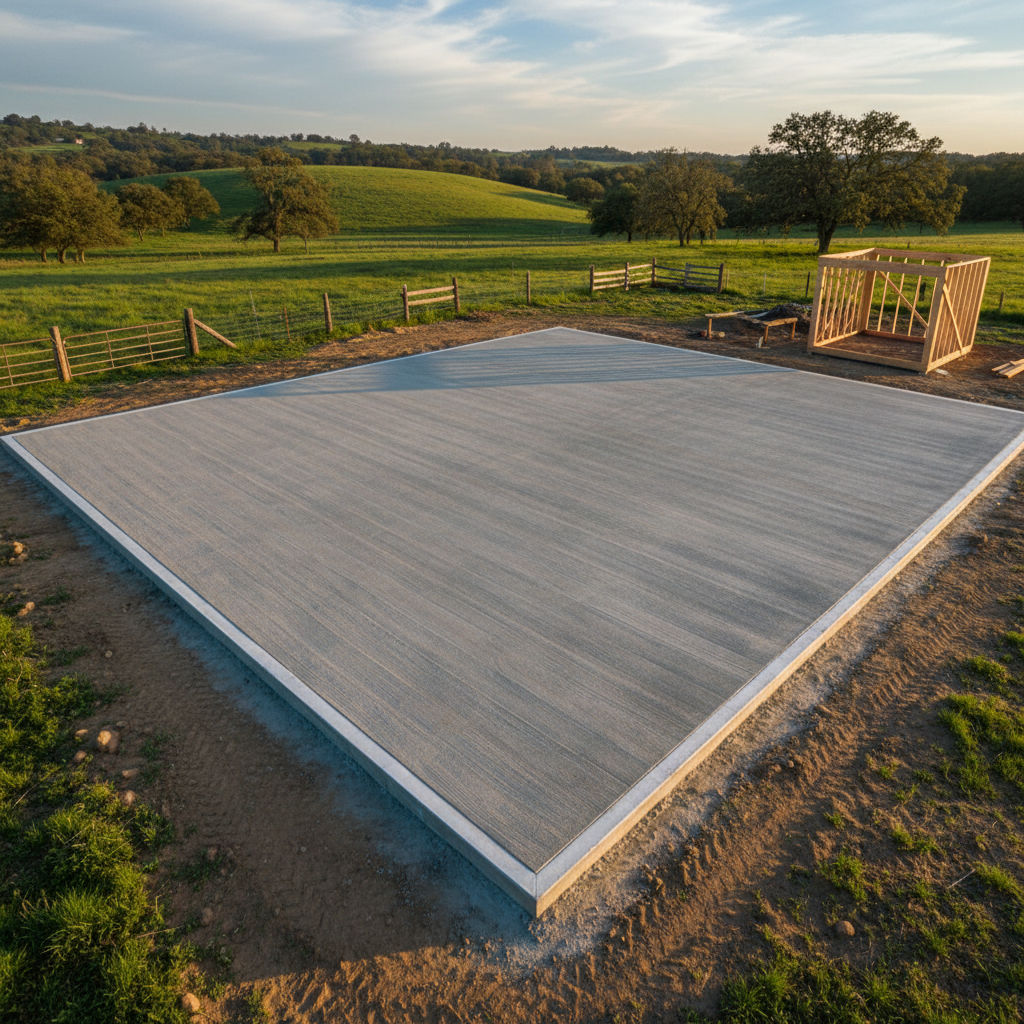
Hobby Farm Barn Pad
New construction pour before winter. 1,200 sq ft, equipment-grade thickness.
Diagnosis
New pour on undisturbed soil. Client needed equipment-grade slab before first frost — tight 6-week window.
Solution
6" slab, #5 rebar at 12" O.C. each way, 4,000 PSI mix, cured with blankets through first cold snap. Thickened edge at door openings.
Result
Poured and stripped in 8 days. Client moved equipment in before ground froze.
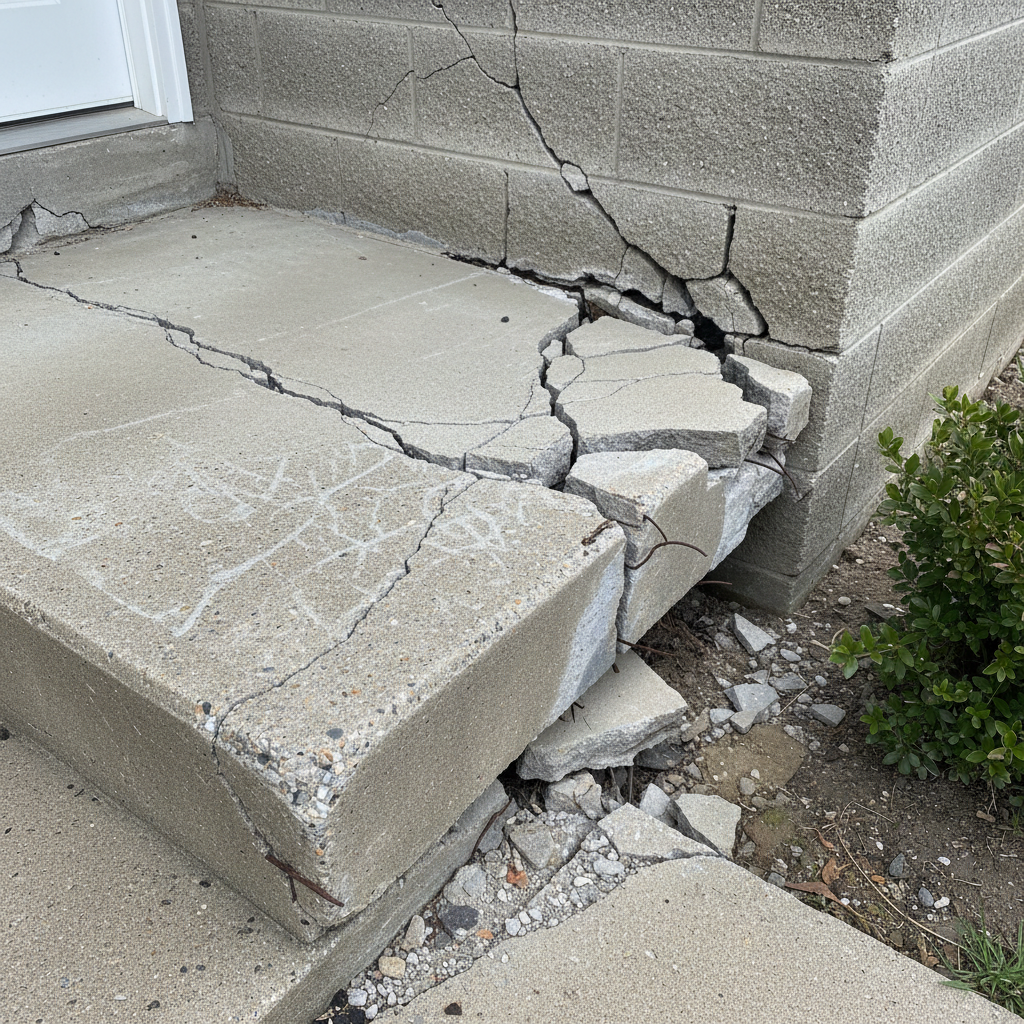
Failing Poured Stoop
Original stoop poured against the block foundation — no isolation joint, now pushing on the wall.
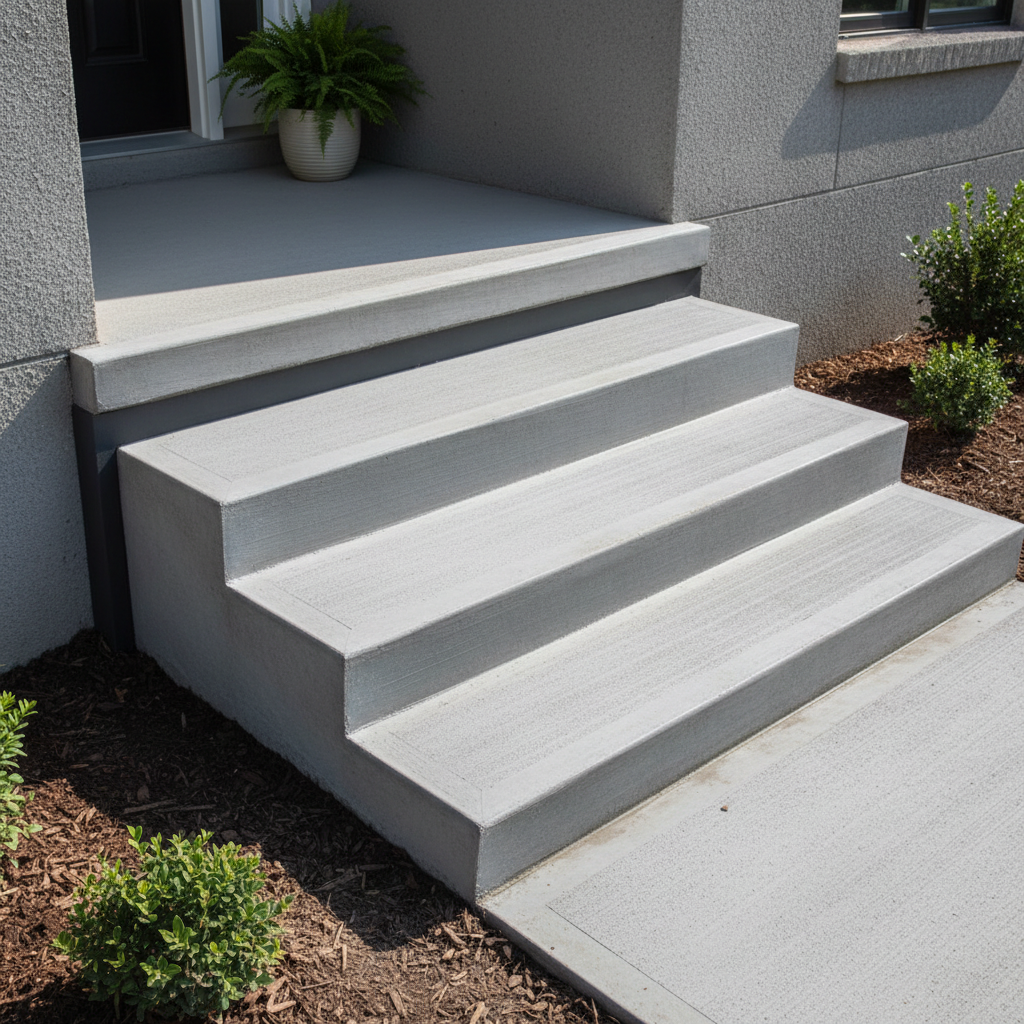
Diagnosis
No isolation joint between stoop and foundation wall. Thermal expansion was transferring load directly to the block — we found a hairline crack in the CMU.
Solution
Full demo. New stoop with ¾" closed-cell foam isolation joint at foundation. Reinforced with L-bar tied to grade beam.
Result
No load transfer to foundation. Masonry contractor repaired CMU crack before our pour.
Craft & Materials
What Goes Into Every Pour.
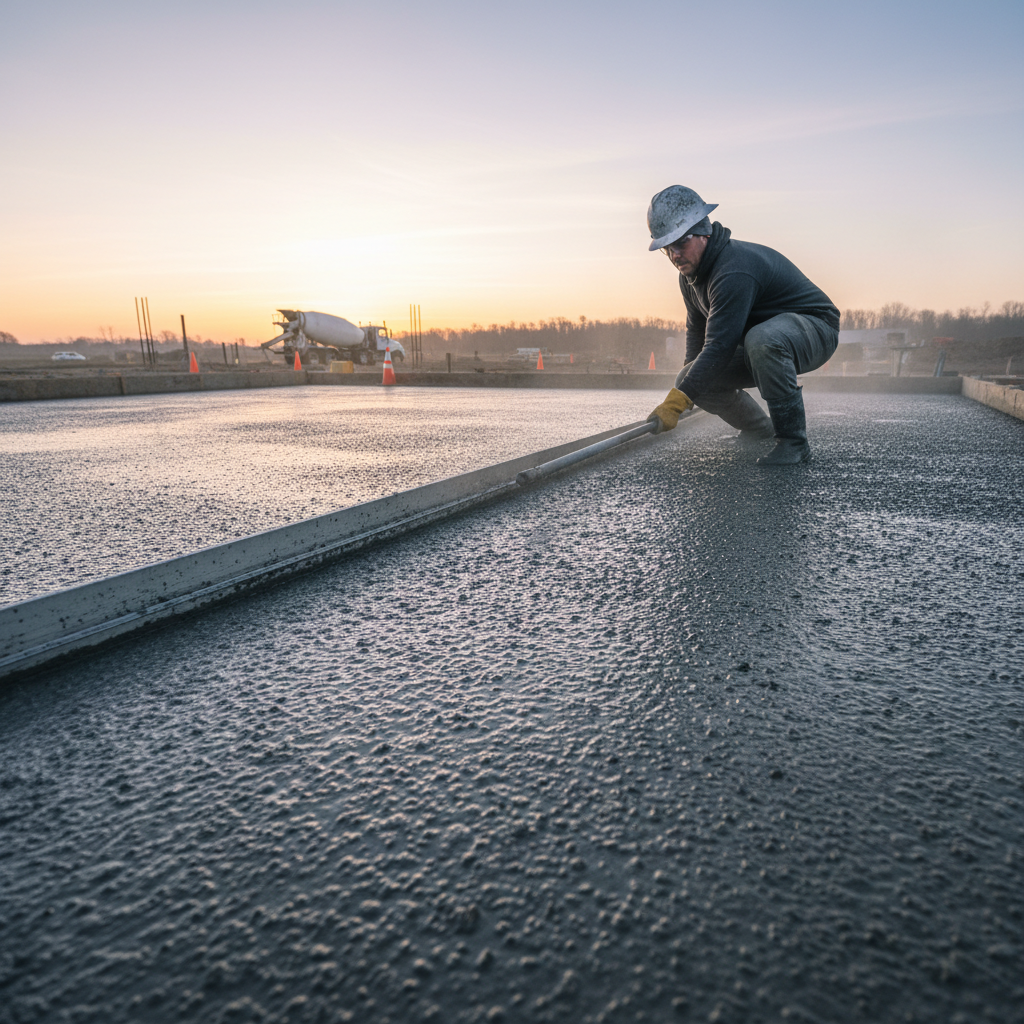
Concrete fails when shortcuts are taken. These are the ingredients we won't skip — and why each one matters.
Crushed Limestone Base
4–6" compacted base, laser-leveled to ±⅛"
Vapor Barrier
6-mil poly sheeting, sealed at all seams
Deformed Rebar
#4 or #5 bar tied at 18" O.C., chaired 1.5" off grade
4,000 PSI Mix
Fiber-reinforced, air-entrained for freeze-thaw cycles
Proper Curing
Curing compound or blankets — minimum 7 days
400+
Projects Completed
12 yrs
In Business
4,000 PSI
Standard Mix
5-yr
Workmanship Warranty
Recent Work
Fresh Off the Forms.
Every project photographed from the same angle — before and after. No stock photos.

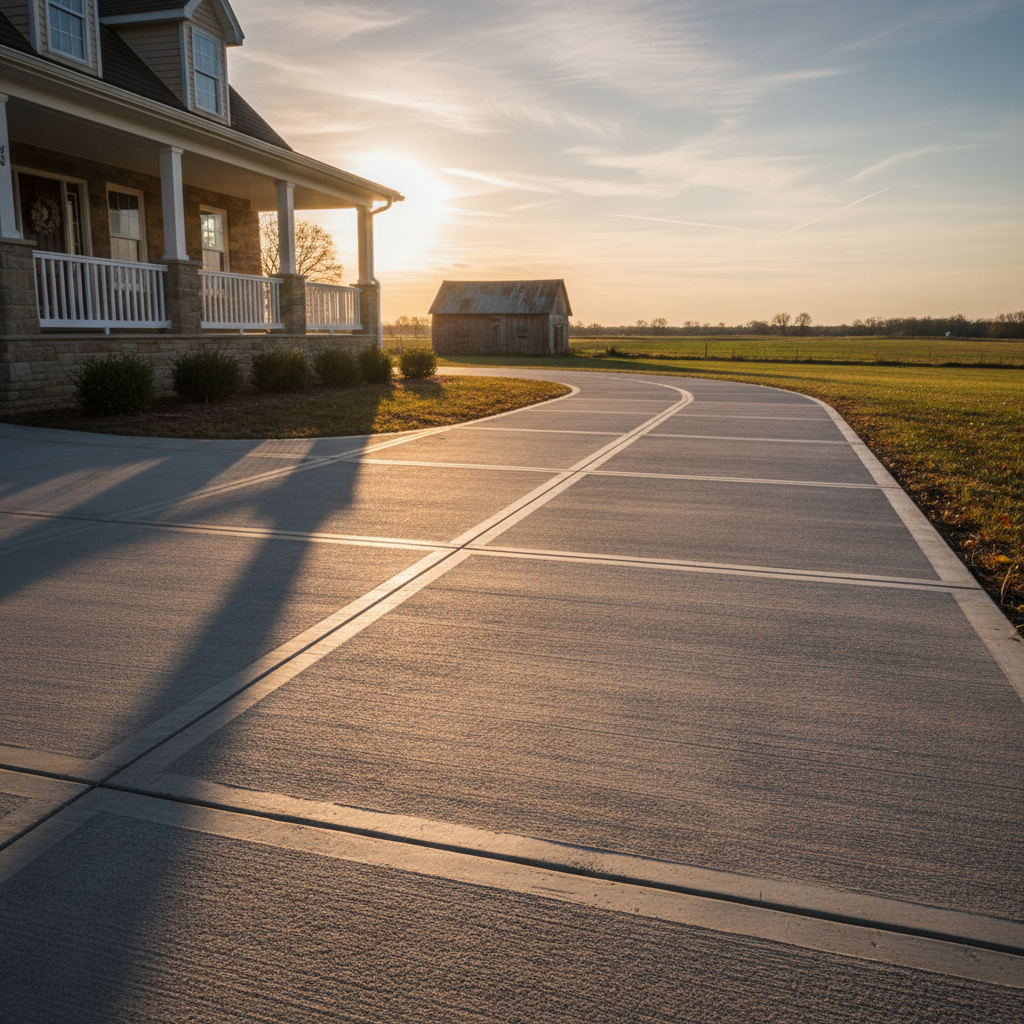
Farmhouse Driveway Replacement
Dekalb County, IL · 880 sq ft
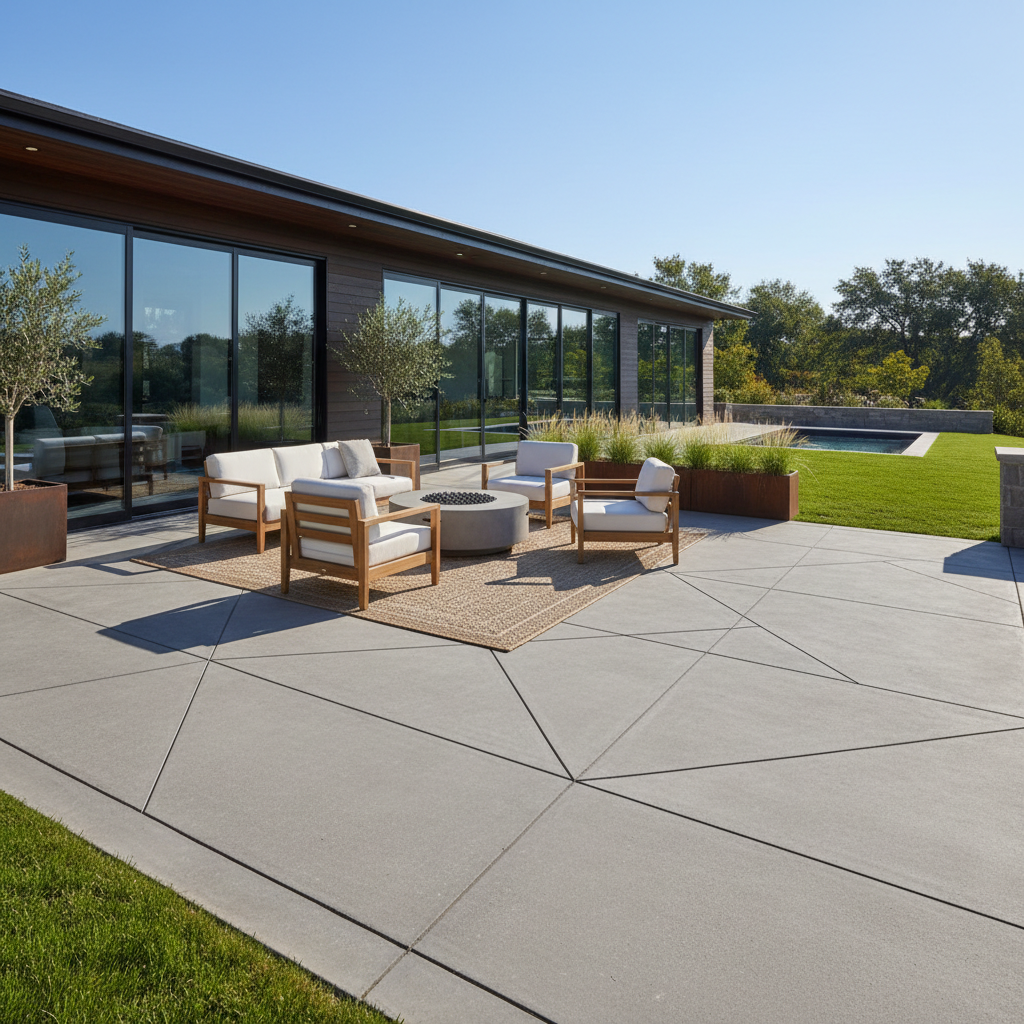
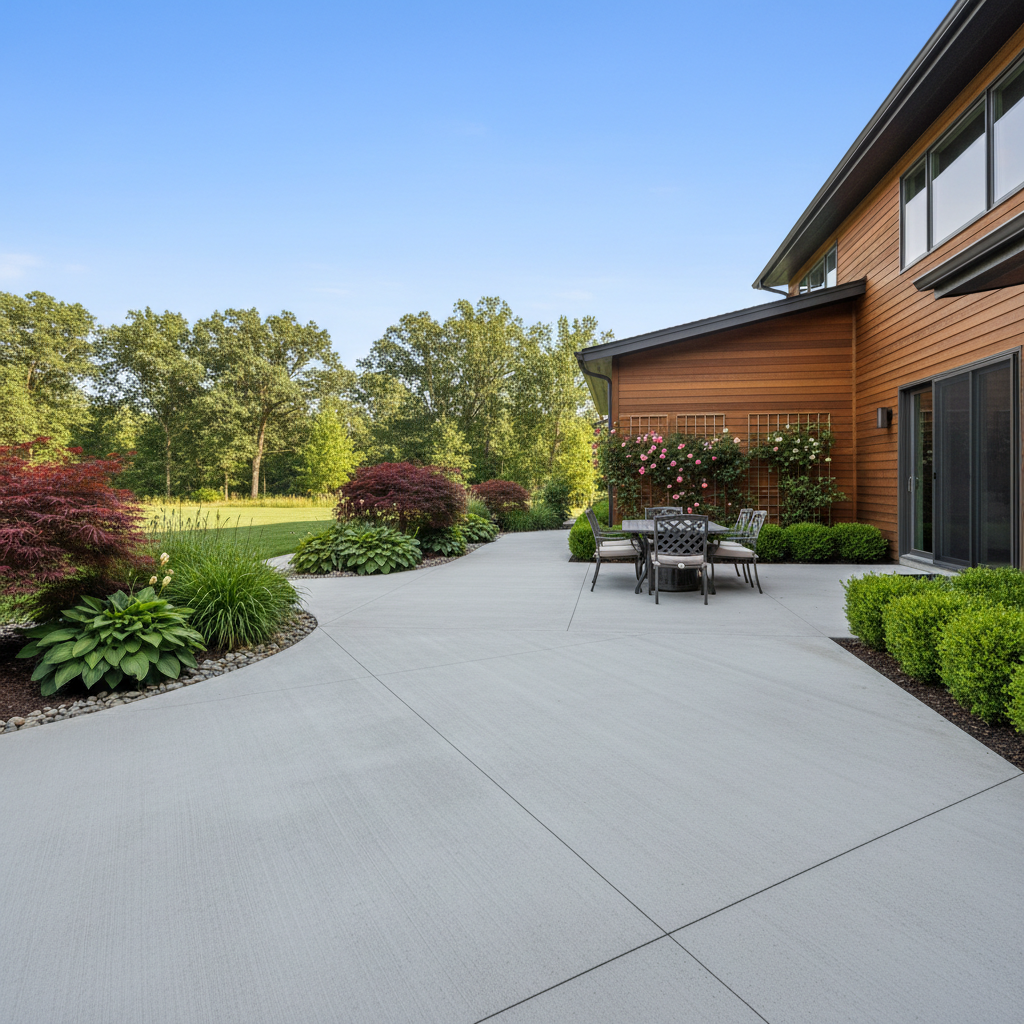
Backyard Entertainment Patio
Sycamore, IL · 560 sq ft
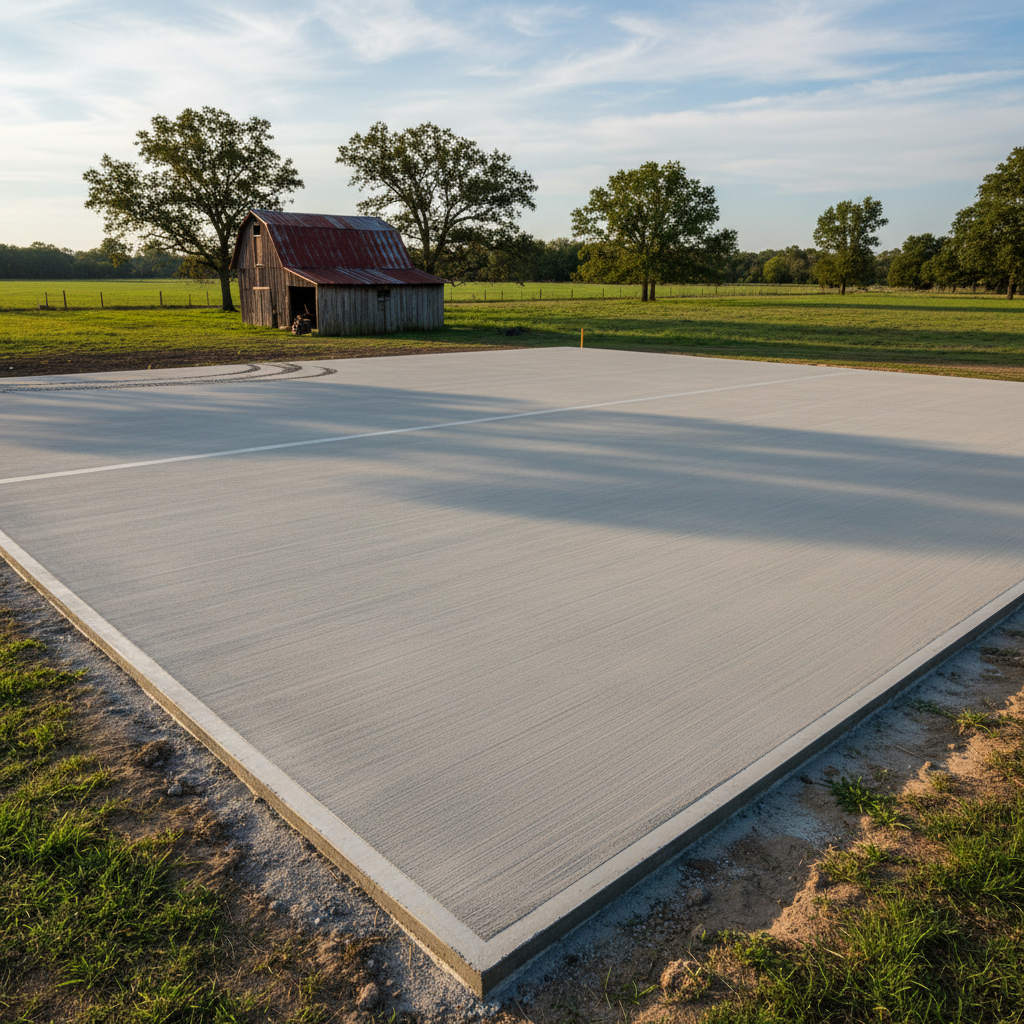
Livestock Barn Pad — Hennipen Farm
Lee County, IL · 1,400 sq ft
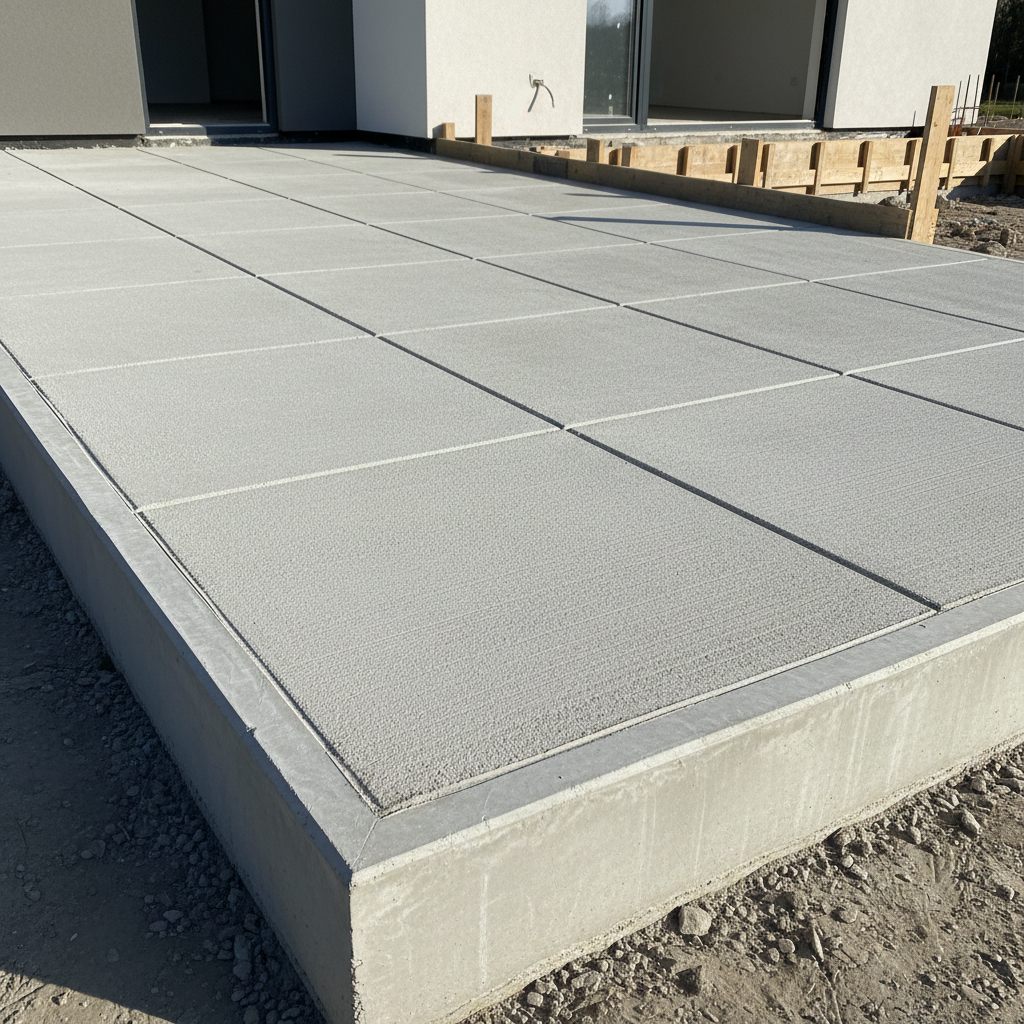
Foundation Approach & Apron
Rochelle, IL · 320 sq ft
5-Step Assessment
Find Out What Your Concrete Actually Needs.
Surface type, condition, square footage, timeline — we'll diagnose your situation and tell you exactly what we'd do before anyone shows up.